The fast fashion environmental impact comes from making and discarding clothes at a pace the planet cannot absorb: heavy use of water, land and fossil-based fibres, then large volumes of waste, very little of which is recycled into new clothing.
This guide looks at where that impact arises and what the evidence says. It is part of a wider look at sustainable fashion, which covers materials, supply chains and the choices that follow from them.
What makes fashion “fast”
Fast fashion describes a model built on speed and volume. The Ellen MacArthur Foundation attributes the growth in clothing output mainly to the fast fashion phenomenon, with quicker turnaround of new styles, more collections offered each year and often lower prices.
The effect on how clothes are used is striking. According to the same Foundation analysis, clothing production has approximately doubled in recent years, while clothing use has declined by almost 40%. In other words, more garments are made while each one is worn less. The Foundation also reports that some garments are estimated to be discarded after just seven to ten wears.
Because the impact is spread across fibre growing, spinning, dyeing, shipping, retail and disposal, no single step explains it. The pattern of low use and quick replacement multiplies the burden of every step that comes before.
Water, land and raw materials
The European Environment Agency has measured what the average European’s clothing and textile habits demand. Per person in the EU, in 2020, textile consumption required nine cubic metres of water and 400 square metres of land, along with a large quantity of raw materials and a sizeable carbon footprint.
The same EEA page adds a point that is easy to miss: most of the resource use and emissions took place outside of Europe. Cotton fields, fibre plants, dye houses and sewing factories sit mostly in other regions, so a shopper in Barcelona or any European city rarely sees the water drawn or the energy burned to make a garment.
Water and land are not the only inputs. Dyeing and finishing rely on chemicals, and growing natural fibres can involve fertilisers. The Ellen MacArthur Foundation notes that the textiles industry relies mostly on non-renewable resources, 98 million tonnes in total per year, including oil for synthetic fibres, fertilisers for cotton and chemicals to produce, dye and finish fibres and textiles.
Synthetic fibres and fossil inputs
Fibre choice matters because fast fashion leans heavily on synthetics, which are cheap and easy to produce in quantity. The EEA states that between 60 to 70 % of textiles are made of plastic, mostly polyester, which is made of oil and gas. The remainder is biobased textiles, including cotton and wool.
That fossil link has two consequences. Synthetic garments tie clothing production to the oil and gas supply chain, and they do not break down the way natural fibres can at the end of life. Natural fibres are not a simple fix, because they carry their own water and land costs, and how fibres are kept in use is the subject of the guide to circular fashion.
Waste, disposal and the recycling gap
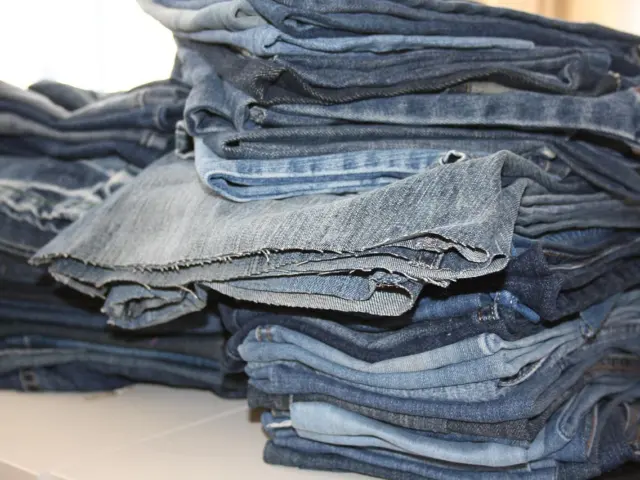
Clothes bought quickly are also thrown away quickly. The European Environment Agency estimates that around 4-9% of all textile products put on the European market are destroyed without ever being used for their intended purpose, covering returned and unsold goods.
Household disposal is the larger flow. According to the same EEA source, each person in the EU consumed on average 16 kg of textiles in 2020, but only about one quarter of the waste (4.4 kg) was collected separately for reuse and recycling, with the rest ending up in mixed household waste. Of all textile waste, 82% came from consumers, the rest being waste from manufacturing or textiles that were never sold.
Recycling does not close the loop. The EEA reports a 2017 estimate that less than 1% of all textiles worldwide are recycled into new products, citing the Ellen MacArthur Foundation. Blended fibres, dyes, trims and the lack of collection systems all make it hard to turn old garments back into new ones, which is why repair, resale and better design get so much attention.
Why the impact is hard to see
Few shoppers can trace a garment back to a field or a factory. Fibre growing, spinning, weaving, dyeing, sewing and shipping often happen in different places and under different owners, so the environmental cost is spread thin and hidden behind a price tag. Low prices also make clothes feel disposable, which feeds the cycle of quick purchase and quick disposal that the Ellen MacArthur Foundation describes.
The figures above are averages and estimates, and they cover different years and different scopes. They are best read as an indication of scale rather than as an exact bill for any one garment. A basic cotton T-shirt and a polyester dress, for example, do not carry the same footprint, and neither do two items of the same type made in different factories.
Climate and the wider footprint
The climate effect of a garment is the sum of energy used in fibre production, manufacturing and transport, plus what happens after use. The Foundation warns that if the fashion industry continues on its current path, by 2050 it could use more than 26% of the carbon budget associated with a 2°C global warming limit, as set out in its circular economy analysis.
The same analysis names the current wasteful, linear system, with low rates of use and low levels of recycling, as the root cause of the problem. That framing is useful for shoppers and small fashion businesses alike: the single biggest lever is usually how long a garment stays in use, rather than the label on a single piece.
Reducing the impact in practice
Individual choices help, though they work best alongside better design and regulation. Wearing items for longer, repairing them, buying second-hand and choosing fewer, better-made pieces all reduce demand for new production. Small fashion businesses can design for durability, offer repairs and be clear about what they know and do not know about their supply chain.
Labels can help narrow choices, but each one covers only part of a product’s life, such as the fibre, the chemicals or the working conditions. How they differ is explained in the guide to textile certifications. This article is general information and does not replace legal or compliance advice for businesses.
For shoppers, a few habits follow from the evidence. Check how often an item will realistically be worn before buying it, look after it so it lasts, and pass it on rather than binning it. Because the EEA shows how little of the waste is collected for reuse and recycling, using local collection and resale options matters more than it might seem.
Frequently asked questions
Is fast fashion worse than other kinds of fashion?
The evidence points to the model, not one garment: fast fashion combines high volumes with short use, and the Ellen MacArthur Foundation links clothing use declining by almost 40% to it.
Do synthetic fibres or natural fibres have the bigger impact?
Both carry costs. Synthetics depend on oil and gas, and the EEA says between 60 to 70 % of textiles are made of plastic. Natural fibres use land and water, so the answer depends on the fibre and on how long the garment is worn.
How much clothing is recycled into new clothing?
Very little. The EEA cites a 2017 estimate that less than 1% of all textiles worldwide are recycled into new products.
Does the impact happen mainly in the countries where clothes are sold?
Usually not. The EEA says most of the resource use and emissions took place outside of Europe, where fibres and garments are produced.