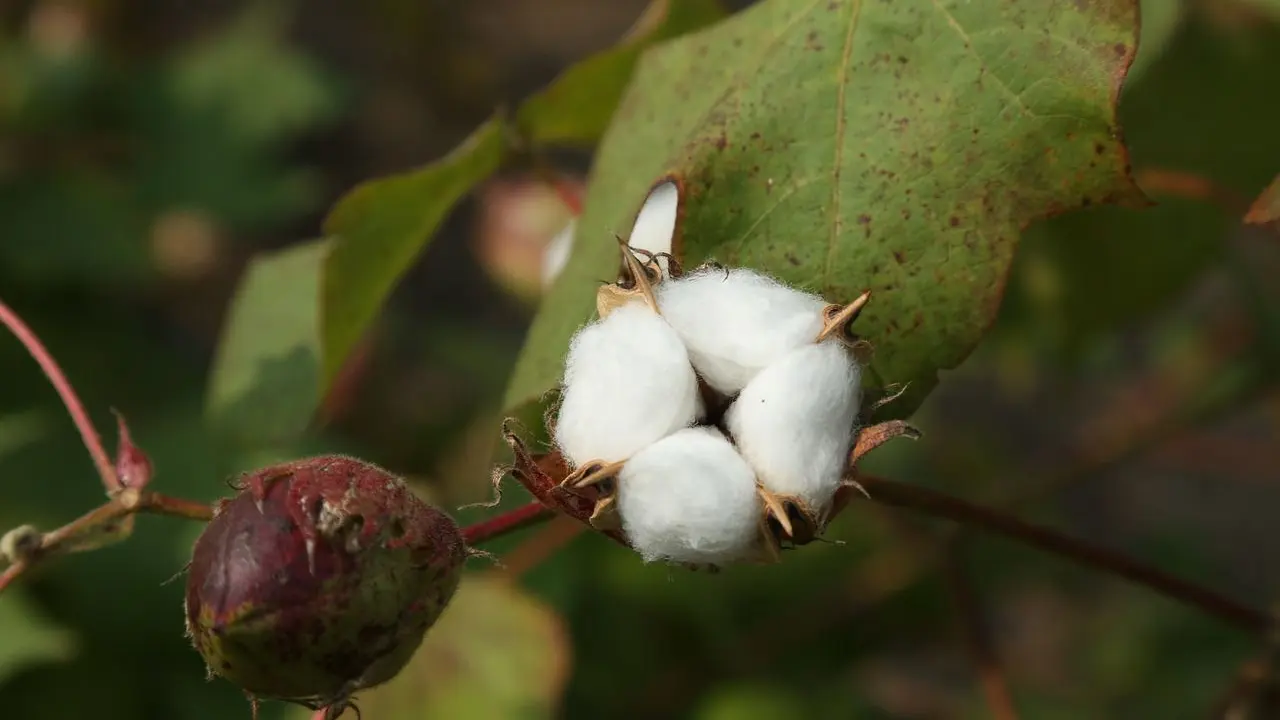
Organic cotton is cotton grown under organic farming rules, without genetically modified seed and with tightly limited synthetic inputs, and it only becomes an organic textile if a certification scheme follows it through spinning, dyeing and sewing.
This guide explains the farming rules, the certification chain and the labels, as part of the wider topic of sustainable fashion. It is general information from public sources, not product advice, and this site is independent of any certifier, brand or public body mentioned.
The meaning of organic cotton
The word “organic” describes a way of farming, not a finished garment. The European Commission explains that producing organically means respecting the rules on organic farming, which are designed to promote environmental protection, maintain biodiversity and build consumer trust. Those rules were written mainly with food in mind, but they also reach some farm products that are not eaten. The same Commission page notes that Annex I to Regulation (EU) 2018/848 brings raw cotton, raw wool, essential oils and a few other items into the scope of the organic legislation.
That detail matters for shoppers. Raw cotton coming out of a field can be organic under farming law, but the shirt on a rail is a different product. Spinning, weaving, bleaching, dyeing and stitching all happen after the farm gate, and a separate textile standard is needed to say anything about them. A claim on a label therefore has two halves: how the fibre was grown, and how it was processed afterwards.
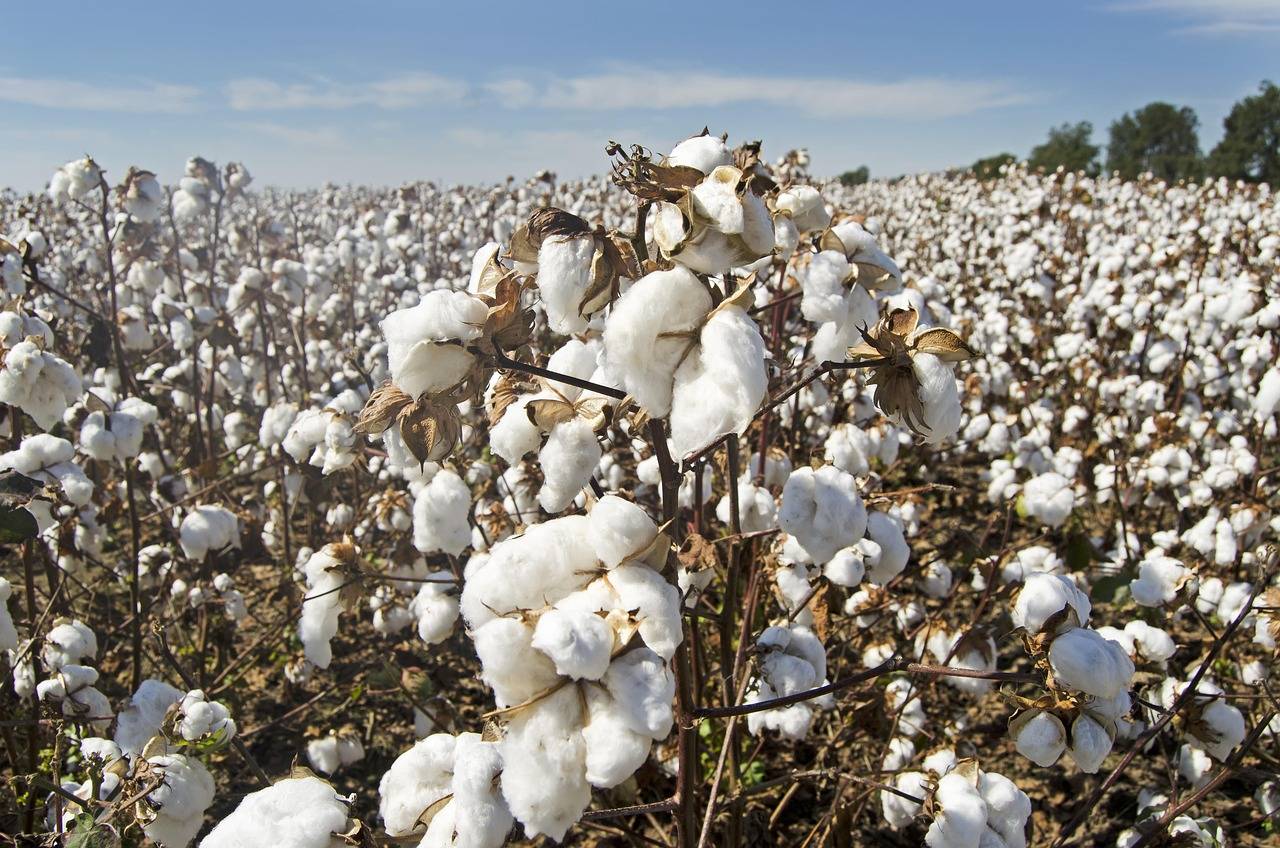
Organic cotton farming methods
Organic farming rules rest on a short list of principles. According to the European Commission, they include the prohibition of the use of GMOs and limiting the use of artificial fertilisers, herbicides and pesticides. Because those shortcuts are closed, organic growers have to manage fertility and pests in other ways.
The same Commission page lists the alternatives for organic farms in general: crop rotation, cultivation of nitrogen fixing plants and other green manure crops to restore the fertility of the soil, and the prohibition of mineral nitrogen fertilisers. Weeds and pests are handled by choosing resistant varieties and using techniques that encourage natural pest control. In a cotton field this typically means rotating cotton with other crops so that pests do not build up and the soil is not drained season after season, and replacing a spray programme with closer observation of the plants.
Organic cotton is not automatically perfect. Yields, local rainfall, irrigation methods and the skill of the farmer all shape the real result. What the organic label does is fix a set of inputs and practices that are checked by an inspector, instead of leaving them to the producer’s own description.
Farming choices and grower livelihoods
Cotton is one of the natural fibres at the heart of the clothing system. The European Environment Agency points out that 60 to 70 % of textiles are made of plastic, mostly polyester, and that the remainder is made of biobased textiles, including cotton and wool. Cotton is therefore the main plant fibre in a market otherwise dominated by oil-based material, which is why its farming practices attract so much attention. The trade-offs with synthetic fibres are covered in the guide to recycled polyester.
The Ellen MacArthur Foundation describes the textiles industry as relying mostly on non-renewable resources, including oil to produce synthetic fibres, fertilisers to grow cotton, and chemicals to produce, dye and finish fibres and textiles. Its vision of a better system calls for using regenerative agriculture for biological-based input such as cotton. In other words, farming method is treated as a design question, not just a detail of supply.
For growers, the economics are as important as the ecology. Pesticide Action Network UK reports that smallholder cotton farmers spend up to 60% of their annual income on pesticides, and that farmers buy agrochemicals on credit at the start of the season. If a harvest is poor, the debt remains. The same organisation describes training programmes in Ethiopia built around good crop husbandry, Integrated Pest Management techniques and soil improvement, where participating farmers moved towards organic certification. This is one reason organic schemes are often discussed as a livelihood issue as well as an environmental one.
Certification along the supply chain
Certification is what turns a farming claim into something a retailer can stand behind. The Global Organic Textile Standard, known as GOTS, is a certification scheme for processed textiles. According to the GOTS standard owner, it combines strict environmental and social requirements with independent certification across the entire textile processing supply chain, and it starts where organic farming activities ends. In other words, the farm side is handled by organic farming certification, and GOTS picks up from the fibre onwards.
The scheme covers every step of production, from fibre processing and spinning to wet processing, manufacturing and trading. Its requirements cover the use of certified organic fibres, chemical inputs and environmental management, wastewater treatment and responsible processing, human rights and due diligence criteria, and traceability and transparent product flow documentation. GOTS also states that it requires annual on-site audits of certified facilities and transaction-based verification, and that its fibre list covers vegetable fibres such as cotton, hemp, linen and jute as well as wool and silk.
The most important rule for the reader is the chain-of-custody one. The GOTS site says that to label a product as GOTS-certified, all companies involved in its production must be certified by approved independent certification bodies. It adds that, unlike systems based on mass balance approaches, GOTS uses physical segregation and volume reconciliation mechanisms. Put simply, certified fibre is not allowed to be mixed with ordinary fibre and then covered by a paperwork credit. This is the same logic that underpins fashion supply chain traceability: a claim is only as strong as the records that link each stage to the next.
Reading labels and spotting weak claims
Because organic cotton passes through many hands, a few questions help when reading a label or a product page. Is the claim about the fibre, the finished garment, or only a brand programme? Is a named standard mentioned, and does the page say which body certified the processing as well as the farming? A phrase such as “made with organic cotton” with no standard attached tells the reader very little, since nothing is said about how much of the fabric it covers.
Farm-level organic status is also not the same as full textile certification. As the European Commission page quoted above makes clear, the organic farming rules deal with raw cotton as an agricultural product. A garment that mentions only the farm stage has not necessarily been checked for dyes, finishing chemicals, wastewater or working conditions. The scope of GOTS, described above, is what adds those layers.
Policy is moving in the same direction. The EU textiles strategy sets out a Commission vision in which all textile products placed on the EU market are durable, repairable, recyclable, free of hazardous substances and produced in respect of social rights and the environment. Anyone making claims professionally should check the current legal text, because wording rules can change and this page is general information and not legal or compliance advice.
Putting organic cotton in context
Organic cotton is one useful option, not a complete answer to the impact of clothing. A garment that is worn for many years, repaired and eventually passed on usually does more than a new one bought to replace something discarded early, whatever the fibre. Fibre choice, durability, care and end-of-life all matter together, which is why organic cotton sits inside a larger set of decisions about materials, supply chains and reuse.
For small fashion businesses the practical lesson is to match the claim to the evidence. If the fibre is certified but the dyeing is not, say exactly that. If a certificate covers one supplier, do not imply that it covers the whole range. Clear, narrow wording is easier to defend than broad promises, and it gives customers the information they need to compare products fairly.
Frequently asked questions
Is organic cotton the same as GOTS-certified cotton?
No. Organic cotton describes how the fibre was grown. GOTS is a textile processing standard that, according to its owner, starts where organic farming activities ends and then checks every later stage.
Do the EU organic farming rules cover finished clothes?
The European Commission lists raw cotton among the farm products inside the organic legislation. That is the fibre stage, not the processed garment, which is where textile standards such as GOTS take over.
Does organic farming mean no pesticides at all?
Not exactly. The Commission describes the rules as limiting the use of artificial fertilisers, herbicides and pesticides, and as relying on methods such as crop rotation and natural pest control.
Why can a blend still be sold as organic?
That depends on the standard and the wording used. A label should name the scheme so the reader can see what share of the fibre it covers and what was checked.