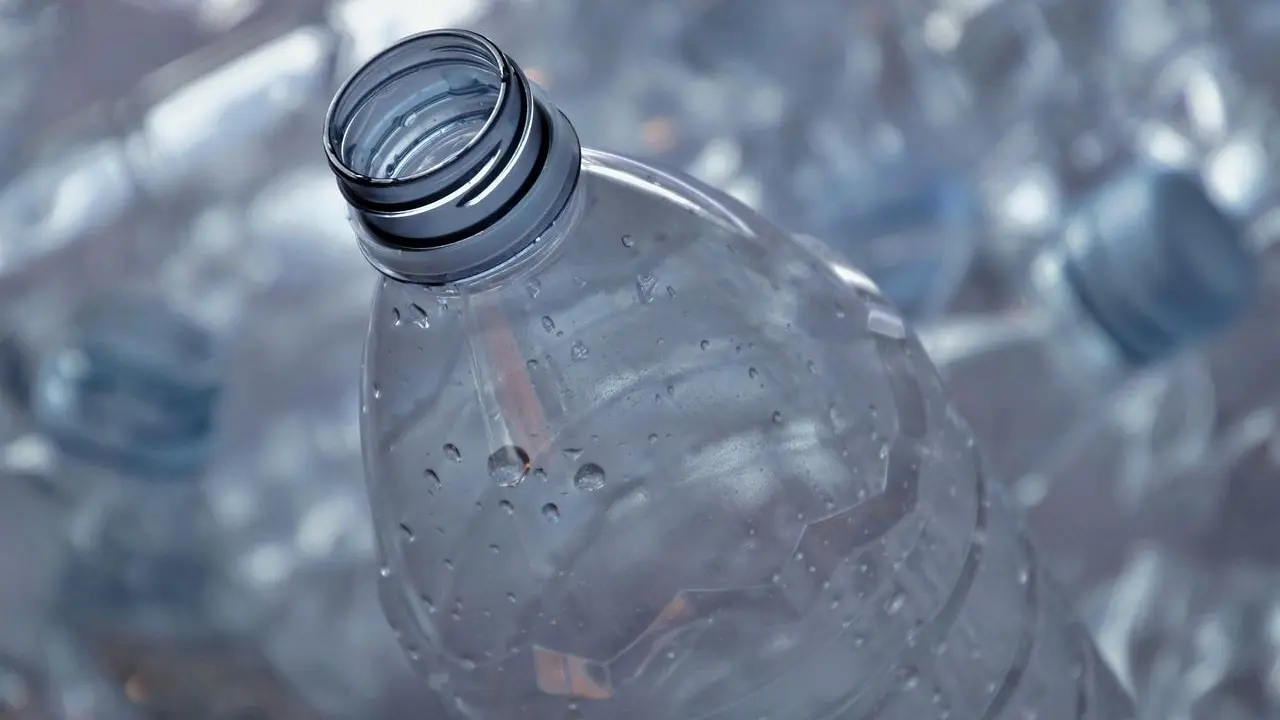
Recycled polyester is polyester fibre made from reprocessed plastic waste, most often used drinks bottles, instead of new oil-based material. It cuts demand for virgin plastic, but it does not make a garment circular by itself.
It is one of the most visible green claims in sustainable fashion, so this guide explains where the material comes from, how it is made and where its limits lie.
What polyester is and why recycled versions exist
Polyester is a synthetic fibre. The European Environment Agency (EEA) notes in its briefing on plastic in textiles that synthetic textile fibres are produced from fossil fuel resources, such as oil and natural gas. The same briefing reports that synthetic fibres, such as polyester and nylon, make up about 60% of clothing and 70 % of household textiles, and that more than half of global fibre production is polyester.
That scale explains the interest in recycled polyester. A material used in so many garments puts a large, steady demand on virgin plastic, so any reliable way to reuse existing plastic looks attractive. Recycled versions are chemically the same polymer, polyethylene terephthalate (PET), as the bottle plastic they often come from, which is why the two industries overlap.
The European Commission, in its textiles strategy, sets out a vision in which textile products on the EU market are durable, repairable, recyclable, and, to a great extent, made of recycled fibres. Recycled polyester is one practical route towards that goal, but only one.
Where the raw material comes from
In practice, most recycled polyester starts as packaging. Used bottles are collected, sorted by plastic type, and baled. A review of PET recycling in the journal literature, available through PubMed Central, describes how PET has become one of the most successfully recycled plastic materials when the ensemble of bottle-to-bottle and bottle-to-strapping, textile and injection applications is considered. Textile is therefore one of several outlets for the same recovered plastic.
Other feedstocks exist. Offcuts from cutting rooms and unsold fabric can be recycled, and old garments can in principle be turned back into fibre. These routes are discussed under textile-to-textile recycling later in this guide, because they behave very differently from the bottle route.
The distinction matters when reading product labels. A tag that says a jacket contains recycled polyester tells a shopper that some of the fibre is recycled, but not which waste stream it came from, how much of the garment it makes up, or whether the garment itself can be recycled again.
How bottles become fibre
There are two broad ways to turn PET waste into a new raw material, and the textile industry uses both.
Mechanical recycling
This is the common route. According to the PET review, once plastic containers are sorted and separated from associated contaminants, washed, and dried, they are ground (flaked), melted, and reprocessed into plastic pellets by extrusion. For textiles, the pellets are melted again and pushed through very fine holes to form filaments, which are then spun into yarn, much as virgin polyester is.
Chemical recycling
Chemical or advanced recycling breaks the polymer apart instead of melting it. The same review explains that the PET polymer is either depolymerized into its original components and repolymerized to a new oligomer, or dissolved for purification. It adds that chemical recycling is suitable for heterogeneous materials or contaminated plastic containers.
Both routes produce a polyester yarn that performs much like the virgin version in a garment. The difference lies upstream, in what has been kept out of landfill or incineration, and downstream, in what happens when the garment is thrown away.
The limits of recycled polyester
The material is useful, but several limits keep it from being a complete answer.
It is still plastic and still fossil-based at its origin
Recycling does not remove the fossil carbon already in the plastic; it delays the point at which that plastic becomes waste. The EEA is blunt about the bigger picture: it states that recycling of synthetic fibres is not observed at scale, and that fibre recycling is especially challenging in the case of synthetic textiles, for both technical and economic reasons.
Bottles and clothes compete for the same plastic
Bottle-to-bottle recycling is a closed loop: a bottle can become a bottle again. The PET review notes that the development of bottle-to-bottle recycling diverts recovered pellets from downcycling applications. When a bottle becomes a fleece instead, that loop is broken, because a polyester garment is rarely collected and recycled into another garment. The result is plastic that leaves the bottle loop and ends up in a product that is rarely recycled again.
Blends are hard to separate
Many garments mix fibres for stretch, softness or strength. The EEA’s circularity indicator on synthetic fibres observes that textile products frequently consist of blends of synthetic and non-synthetic fibres, which improves functionality but complicates recycling processes. The same indicator reports that in 2024, 57% of fibres and yarns used by EU industry were of synthetic origin, corresponding to approximately 2.6 million tonnes, so the blend problem touches a very large volume.
Very little clothing becomes new clothing
The EEA’s textiles pages cite an estimate that less than 1% of all textiles worldwide are recycled into new products. Recycled polyester made from bottles does not change that figure, because the input was never a textile.
Microplastics and washing
Recycled polyester is still a synthetic fibre, so it sheds microfibres like other synthetic textiles. The EEA states that microplastics are shed from synthetic textiles throughout their life cycles, from fibre and fabric manufacturing through use and washing to their final disposal, and it estimates that between 200 000 and 500 000 tonnes of microplastic fibres from textiles enter the marine environment each year, as set out in its briefing.
Laundry habits and gear can reduce the release but not eliminate it. A laboratory study published through PubMed Central tested consumer devices and found that a washing bag and a laundry ball trapped 39% and 10% of the polyester fibres discharged in washings, respectively. The European Commission’s textiles strategy also lists addressing the unintentional release of microplastics from synthetic textiles among the actions it has taken or will take, as described on its strategy page.
Recycled polyester compared with other choices
Comparing fibres is rarely simple. The EEA briefing compares full life cycles and estimates that the full life cycle of 1 kg of polyester fabric is responsible for the release of more than 30 kg of carbon dioxide equivalent, while only around 20 kg are associated with cotton, as the EEA briefing explains.
Natural fibres bring their own trade-offs, such as land, water and farming inputs, which is why guides such as the one on organic cotton weigh them case by case. The EEA briefing makes the same point, saying there is no go-to fibre type that by itself constitutes a sustainable textiles industry.
For shoppers, the practical questions are less about one fibre and more about the garment: how long it will be worn, whether it is a single fibre or a blend, and how it will be washed and eventually passed on or recycled. Durable design and long use usually matter more than the recycled label alone.
Reading recycled claims and labels
Claims about recycled content vary widely in quality. A trustworthy claim states the percentage of recycled fibre, names the waste stream if known, and can be traced to an independent check. Independent labelling schemes and how they work are covered in the guide to textile certifications.
Vague wording such as “made from recycled materials” with no figure is harder to judge. A garment that is a blend of recycled polyester and elastane, for example, may be very hard to recycle again even though the label sounds green. Treat recycled content as one useful fact about a product, not as proof that the product is sustainable.
This guide is general information about materials and not advice on regulation or compliance; businesses making claims should check the current legal requirements that apply to them.
Frequently asked questions
Is recycled polyester the same as virgin polyester?
Chemically it is the same polymer, and in a finished garment it performs very similarly. The difference is the origin of the raw material: reprocessed plastic rather than newly made plastic.
Does recycled polyester release microplastics?
Yes. Recycled polyester is still a synthetic fibre, and the EEA briefing on plastic in textiles describes microplastics being shed from synthetic textiles throughout their life cycles, including during use and washing.
Can a recycled polyester garment be recycled again?
In principle yes, but the EEA says recycling of synthetic fibres is not observed at scale, and blends with other fibres make it harder. Check the label for a single-fibre composition if recyclability matters to you.
Why does bottle plastic matter for clothing?
Bottle-to-bottle recycling is a closed loop for packaging, and the PET recycling review notes it diverts recovered pellets from downcycling applications. Using bottles for fibre takes plastic out of that loop.