Second hand shopping in Barcelona runs through a municipal flea market, neighbourhood reuse points, swap events and donation channels rather than a single scheme. This guide explains how those channels work.
It sits within the wider guide to living in Barcelona, which covers everyday practicalities across the city.
How reuse fits into the way Barcelona handles waste
Second-hand buying only makes sense when it is seen as one part of a larger system. The European Commission describes the EU waste framework directive as setting a waste hierarchy in which preventing waste is the preferred option and sending waste to landfill should be the last resort. A garment or a chair that stays in use never becomes waste in the first place, which is why reuse matters to that approach.
The European Environment Agency adds the reason this matters for clothes in particular. In its briefing on textiles, it notes that textile production and consumption cause significant environmental, climate and social impacts. Keeping garments in circulation for longer is one way to ease those pressures, and it is the logic behind most of the city schemes described below.
The city council uses the same framing for its own projects. A municipal press release states that European and Spanish waste rules set prevention and reuse as priority options, and presents its exchange corners as a way to extend the useful life of products within a circular economy model. In practice that means second-hand activity in the city is a mix of public services, non-profit social enterprises and private traders, each with a different role.
For readers interested in what happens to materials that cannot be reused, the separate guide to recycling in Barcelona explains the bins and drop-off points that take over once an item has reached the end of its life.
The municipal flea market at Els Encants
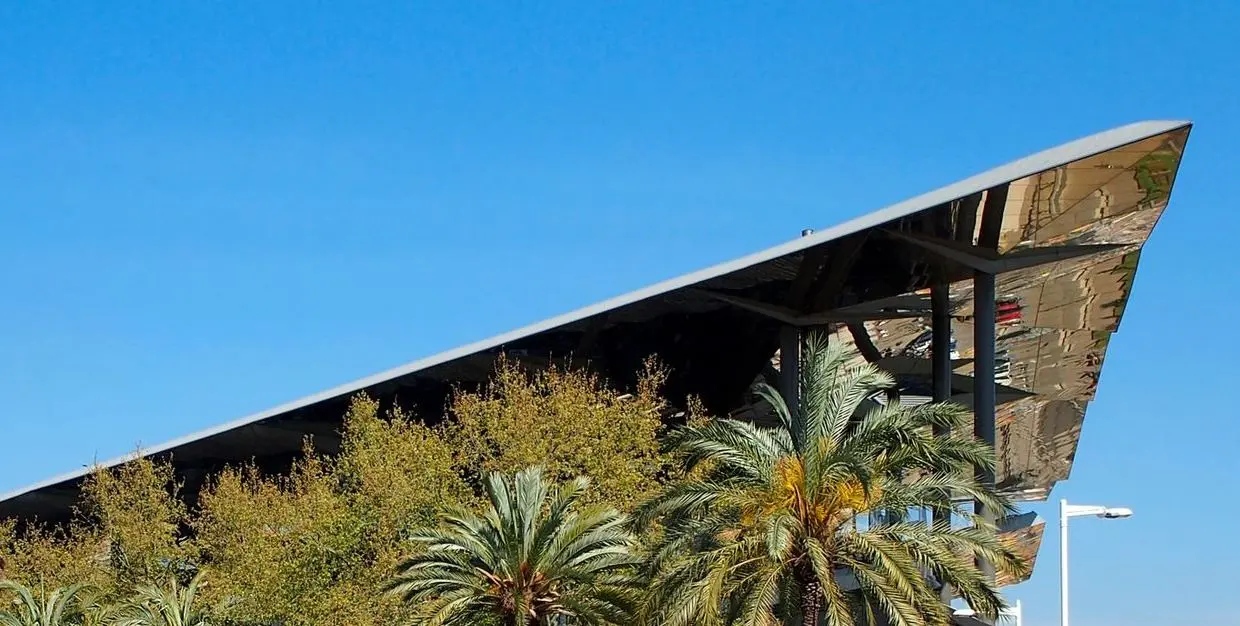
The best-known public channel is the Mercat dels Encants, formally called the Fira de Bellcaire. The city’s own guide calls it the most important and oldest antiques and second-hand market in Barcelona. It adds that the market is considered one of the oldest fairs in Europe, that some think it could date back to the 15th century, and that it has been in Plaça de les Glòries Catalanes since 1929. The current building, with a stainless steel and glass roof that forms a play of mirrors, has housed the market since 2013.
The same page describes a mixture of old traders, lifelong locals, tourists and young people looking for vintage clothes. At the time of writing, it lists the market as open Monday, Wednesday, Friday and Saturday from 9 am to 8 pm. Opening days and hours can change, so the city page is the place to confirm them before a visit.
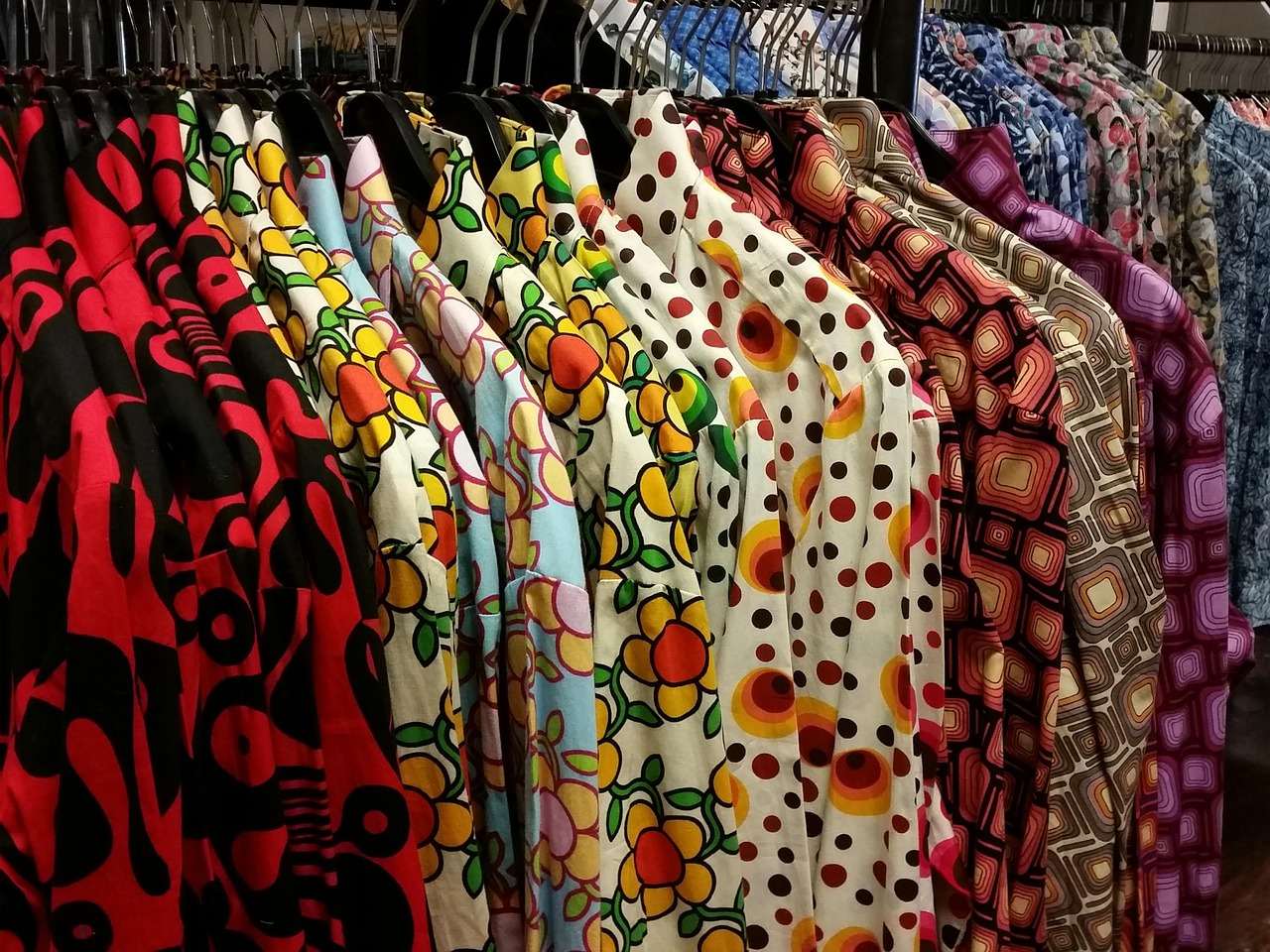
What is sold is deliberately broad. The municipal markets listing names antiques and collectables, footwear, jewellery, household items and used and vintage clothing among the goods on sale. A shopper looking for garments should therefore expect them to sit among many other kinds of goods.
The official pages describe the market as a place where generations of traders and buyers have sold or bought all types of old, new, curious or conventional articles. They do not publish price guidance, so this guide makes no claim about what items cost.
Reuse points, swaps and exchange corners
Alongside the market, the city runs reuse activity that does not involve money at all. The council’s Renova la teva roba page describes a clothing exchange network for garments that are no longer worn but are in good condition. It takes place in spring and autumn at different venues and organisations around the city, anyone can take part, and the project began in November 2011.
The same page suggests that clothes can be given new life through customising and upcycling, and that as a last resort they can be taken to the Roba Amiga containers on the street or to the green points. In other words, the swap is the first choice, and donation is the fallback.
The neighbourhood green points, known locally as Punts Verds de Barri, add another layer. According to a council press release dated 25 April 2026, existing exchange spaces for books and toys were joined that April by a music and film corner for CDs, DVDs and vinyl at the green points in Poblenou, Vallcarca, Fort Pienc and Sants. It launched as a six-month pilot, with monitoring to decide whether it should spread to other green points. Under the pilot’s rules, residents could leave and take items in good condition for free, and each person could take up to three items a day, more if they also brought some.
At the time of writing, that pilot period has ended. Check the council’s green point network pages for whether the music and film corner continues or has been extended before making a trip.
These exchange corners show how the city thinks about reuse: free, local and based on leaving something as well as taking something. They do not replace buying second-hand, but they cover categories such as books, toys, discs and records where a market stall may not be the most convenient route.
Repair as the other half of keeping things in use
Buying used is not the only option, because something broken is often still worth keeping. The council’s reuse advice page lists several habits: repair what breaks, give away what is no longer needed, modify items that have gone out of fashion, and buy from second-hand shops and markets. It says that repairing an object usually costs less time and money than replacing it with a new one.
The city also runs the Reparatruck, a mobile self-repair unit made available to all residents. The vehicle carries the tools and a technician who helps people learn to repair small appliances, electronic devices and bicycles. The project is promoted by the social and solidarity economy organisation Solidança, and the service is free of charge. A calendar of locations and a registration link are published on the council page.
Clothing repair is less visible in the official material, so this guide does not point to specific tailors or menders. The council does publish a programme of prevention, repair and reuse workshops on its workshops page, organised by district at civic centres and neighbourhood venues, and the topics change over time.
Giving clothes a second life through donation
Reuse also depends on people passing things on. The council’s clothing collection page describes a free home collection service. Two non-profit social integration enterprises, Formació i Treball and Solidança, carry out the pick-up. The stated aim is to give a second life to household clothing that is no longer used, and the page says the clothes, together with those from the orange containers, are sorted for different destinations, with reuse prioritised and recycling as the alternative.
To request a collection, residents call the municipal information line on 010 and give their name, address, telephone number and an approximate volume. The service is meant for people who accumulate clothing, and the minimum is the equivalent of 5 rubbish bags, with a lower minimum for people with accredited reduced mobility. Accepted items include used clothing in good condition, accessories, footwear, towels and sheets. The page also lists the days and time slots at the time of writing, so it is worth checking before calling.
Giving through these channels differs from selling to a shop or resale platform, because the clothes are donated and sorted by the social enterprises rather than bought. Only clothing in good condition is requested, and the page states that recycling is the route when reuse is not possible.
Buying second-hand with a reuse mindset
None of the official pages ranks sellers, and this guide does not either. What can be said in general is that a market, a swap and a donation channel suit different needs. A flea market suits browsing and comparing. A swap event suits people who also have items to give. Repair sessions suit people who already own something worth fixing.
The wider story of how the city became a clothing centre also shapes how these markets feel today. For that background, the article on Barcelona textile history traces the industrial past behind the city’s garment trade.
A few habits apply whichever route is chosen. Look closely at seams, fastenings and fabric condition before committing. Check what a garment is made of and how it should be cared for. Ask whether the item will actually be worn, because the environmental benefit of reuse depends on use. This is general consumer advice rather than a rule drawn from the city pages, and it carries no legal or regulatory weight.
Frequently asked questions
Is Els Encants only a place for clothes?
No. The market is a general antiques and second-hand fair, so garments are just one category among furniture, collectables and household goods.
Can unwanted clothes be picked up from the door?
Yes, the city offers a free service for residents with enough clothing to hand over. It is arranged by phone and handled by non-profit enterprises, and the official page sets out the conditions.
Do exchange corners accept any item?
No. They are designed for particular categories, such as books and toys, plus music and film discs during the recent pilot, and the items must be in good condition.
Is this page an official city guide?
No. It is an independent explainer that summarises public information from municipal and European pages, and it does not offer shopping, repair or collection services itself.