

Recycling in Barcelona follows a simple sorting logic: household waste is separated into organic, packaging, paper and cardboard, glass and general waste, and everything else goes to a Green Point or a special collection service.
The rules sit inside the wider rhythm of living in Barcelona, where the council publishes its own guidance for residents and visitors. This guide explains how the system is organised, which colour takes which item, and where to take what the street bins cannot accept.
How household sorting is organised
According to the city council’s street bins page, Barcelona is committed to the selective collection of five waste categories: organic waste, packaging, paper and cardboard, glass and general waste. Street bins are the most widely used system across the city, and residents in areas using that model have bins within 100 metres of their homes.
Street bins are not the only model. The council’s household waste collection overview lists street bins, pneumatic drop boxes, mobile platforms, door-to-door collection and manual collection, each adapted to the character of a neighbourhood.
Door-to-door collection works differently from bins on the pavement. The council’s door-to-door page describes leaving waste separated by fraction in front of the building entrance on the day set by a collection calendar. At the time of writing the page reports that the model has been introduced in Sarrià and Sant Andreu de Palomar, with other neighbourhoods to follow. Residents of those areas should follow their local calendar rather than the street-bin habits described below.
What goes in each bin colour
The council’s street bins page sets out a colour for each fraction, with a list of what belongs inside and what does not. The yellow bin is for packaging, the blue bin for paper and cardboard, the green bin for glass, the brown bin for organic waste and the grey bin for general waste.
- Yellow, packaging: plastic containers, drink and food cans, cartons, metal lids and caps, aluminium foil, clear film and polystyrene trays. Toys, garden hoses, tubes, video tapes, CDs and containers of hazardous products such as solvents or paint stay out.
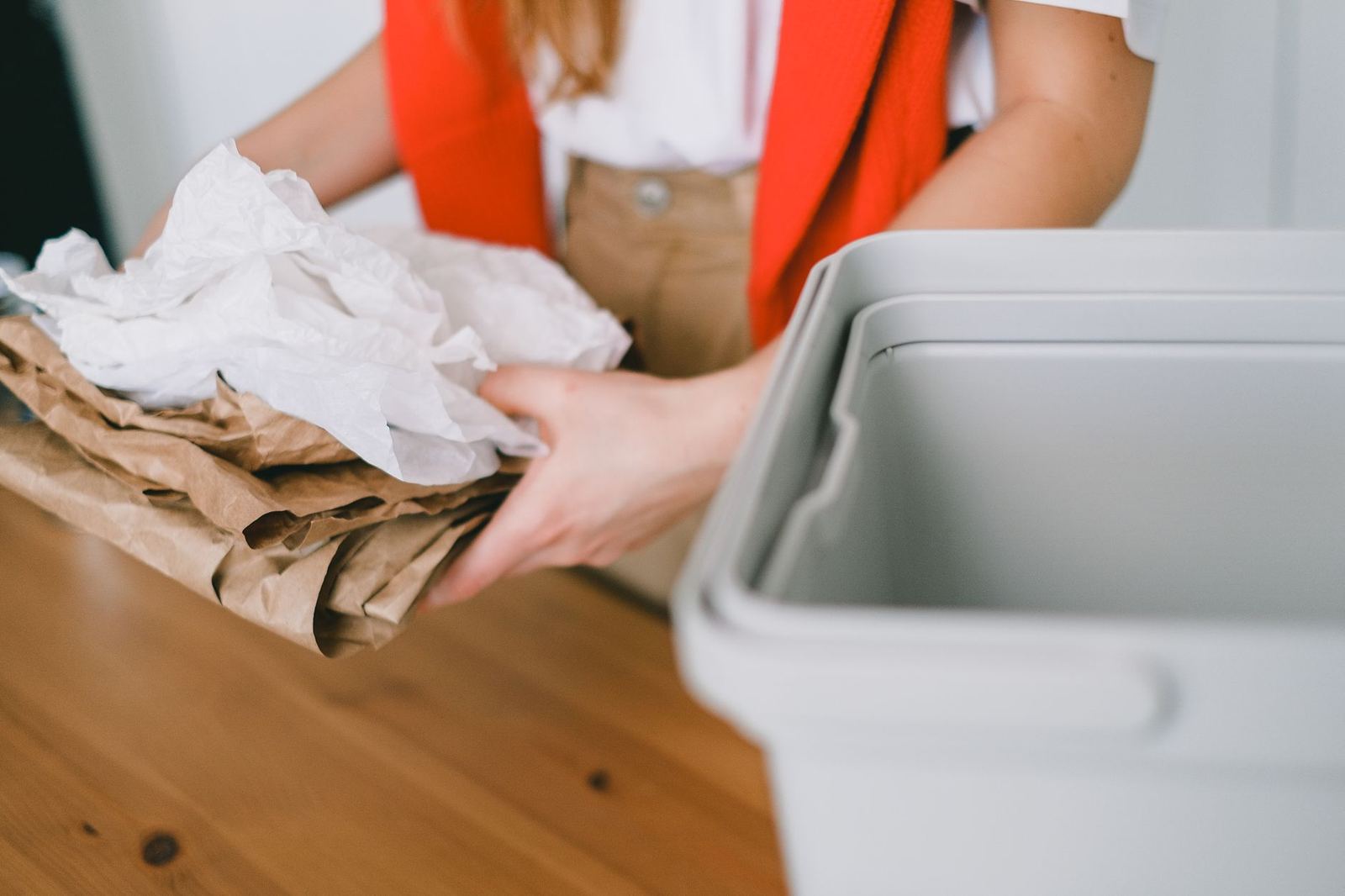
- Blue, paper and cardboard: cardboard packaging and boxes, newspapers, magazines, notebooks without a metal spiral, envelopes, paper bags, loose sheets and gift wrap.
- Green, glass: glass bottles and jars, without their caps and lids. Broken drinking glasses, flat glass, mirrors, ceramics, plates, light bulbs and fluorescent tubes do not belong here.
- Brown, organic: scraps of meat, fish, bread, fruit, vegetables and shellfish, egg and nut shells, corks, tea bags, coffee grounds, kitchen paper and napkins soiled with oil, and garden trimmings.
- Grey, general waste: cigarette butts, sanitary pads, nappies, sweepings, cotton, hair, used pens and pencils, and animal waste.
Each of these lists is taken from the council’s own street bins page, which also states what the collected material becomes, from new glass containers to compost and biogas.
Items that cause confusion
A few items regularly end up in the wrong bin. The street bins page says napkins and kitchen paper soiled with oil go to the brown bin, not the blue one, and that cartons and aluminium foil go to the yellow bin rather than the paper stream. The same page says tea bags, oily kitchen paper and food scraps belong in the brown bin rather than the grey bin.
The city also runs a searchable waste finder. Its pages for each fraction list many everyday items. The recyclables page includes items such as a toothpaste tube, a plastic bag and aluminium foil. The residual waste page lists cigarette butts, chewing gum and cat litter, and explains that this fraction is for waste that cannot be recycled.
The finder also notes that the residual fraction often holds material that could have been recycled, which is then sorted again at an ecopark, so careful sorting at home saves that second pass.
Green Points for everything else
Anything the street bins cannot take goes to a Green Point, known locally as a Punt Verd. The council’s Green Point network page counts 134 Green Points across the city, grouped as Area, Neighbourhood and Mobile Green Points.
Neighbourhood Green Points sit inside the urban fabric and take smaller amounts of household waste. The same page lists what they accept, including clothing, footwear, ink cartridges, electric and electronic devices, cooking oil, batteries, paints and varnishes, and fluorescent tubes and light bulbs. Mobile Green Points are lorries that accept the same items and visit different parts of the city at set times.
Area Green Points are large facilities on the outskirts. The waste finder entry describes them as the designated drop-off for bulky waste such as large appliances, garden and pruning waste, old junk and glass panes. Individuals can use them as well as businesses, and the network page says private users can do so free of charge.
Not everything is accepted at the smaller sites. The network page says neighbourhood and mobile points do not take organic waste, rubble, furniture and junk or wood waste. Used cooking oil, a frequent kitchen question, is on the finder’s Green Point list, so it should be taken there rather than poured away or put in the brown bin.
Clothes, shoes and textiles
Old clothes are among the household streams where Europe-wide rules recently changed. The EU waste framework directive, Directive (EU) 2018/851, required member states to set up separate collection for textiles by 1 January 2025. That deadline has now passed, so separate textile collection is the expected norm rather than a future plan.
In Barcelona the council’s clothes collection page describes a free home pick-up booked through the 010 information line, plus the orange containers on the street. It also says the council works with the Roba Amiga project through 50 bins around the city. Garments should be clean, folded and preferably in a sealed bag, and the page says not to donate dirty or torn clothes, or items covered in food or paint.
The waste finder also lists clothes and other textiles under the Green Point fraction, so a neighbourhood or mobile point is another route for worn-out garments. For items still in good condition, resale and reuse come first; the guide to second hand shopping in Barcelona covers where that happens in the city.
Furniture, junk and bulky waste
Old furniture does not go in the street bins. The council’s furniture and junk collection page says every street has a set day of the week for free collection, and that items must be left in front of the doorway between 8.00 p.m. and 10.00 p.m. The day for a given street is available through the procedure portal or the 010 line. Sofas, doors, chairs and wooden boxes are accepted, while rubble and toilets from building work are not.
Large volumes can use a paid home-collection service for households, shops and offices, and the same page notes it is free for people with a disability certificate. Fridges, freezers and air conditioners with CFCs should be taken to a Green Point to protect the environment, as the page explains.
Composting and reducing waste at source
Alongside the bins, some neighbourhoods have community composters where residents bring kitchen and garden scraps and receive finished compost in return. The council’s community composting page explains that participants register as a household and complete a short training programme first.
Street layout shapes everyday services too, and the guide to Barcelona superblocks shows how the city is reorganising some of its streets.
Frequently asked questions
Do cigarette butts go in a recycling bin?
No. The council lists them with general waste, so they belong in the grey bin rather than any recycling fraction.
Can visitors use the same bins as residents?
Street bins are public and use the same colours throughout the city. Visitors staying in a neighbourhood with door-to-door collection should ask their host for the local calendar, since waste there is left by the entrance on set days.
What should I do with a broken drinking glass?
It does not belong in the green bin, which takes only bottles and jars. The waste finder lists glassware and other glass objects among items for a Green Point, so wrap it safely and take it to a neighbourhood or area facility.
Where can I check what a particular item needs?
The online waste finder lets you type an item and, with an address, tells you where it goes. For clothes pick-ups and collection days, the council points residents to its information line.